



An excellent body mounted with the wrong lens gives a flat image. Take a more modest camera, stick the right lens in front of it, and the result jumps up a notch: cleaner, livelier, more controlled. The difference plays out right there, in front of the sensor.
That's exactly where renting makes all the sense in the world. A lens billed at €1,500, €2,000 or €3,000 to buy rents by the day, the weekend or the week. You mount the lens cut out for your project without locking it away in a cupboard eleven months out of twelve.
You still have to aim right, though. "The best lens" means nothing in the absolute. What matters is the one that fits your use, your mount, your shooting location and the way you work.
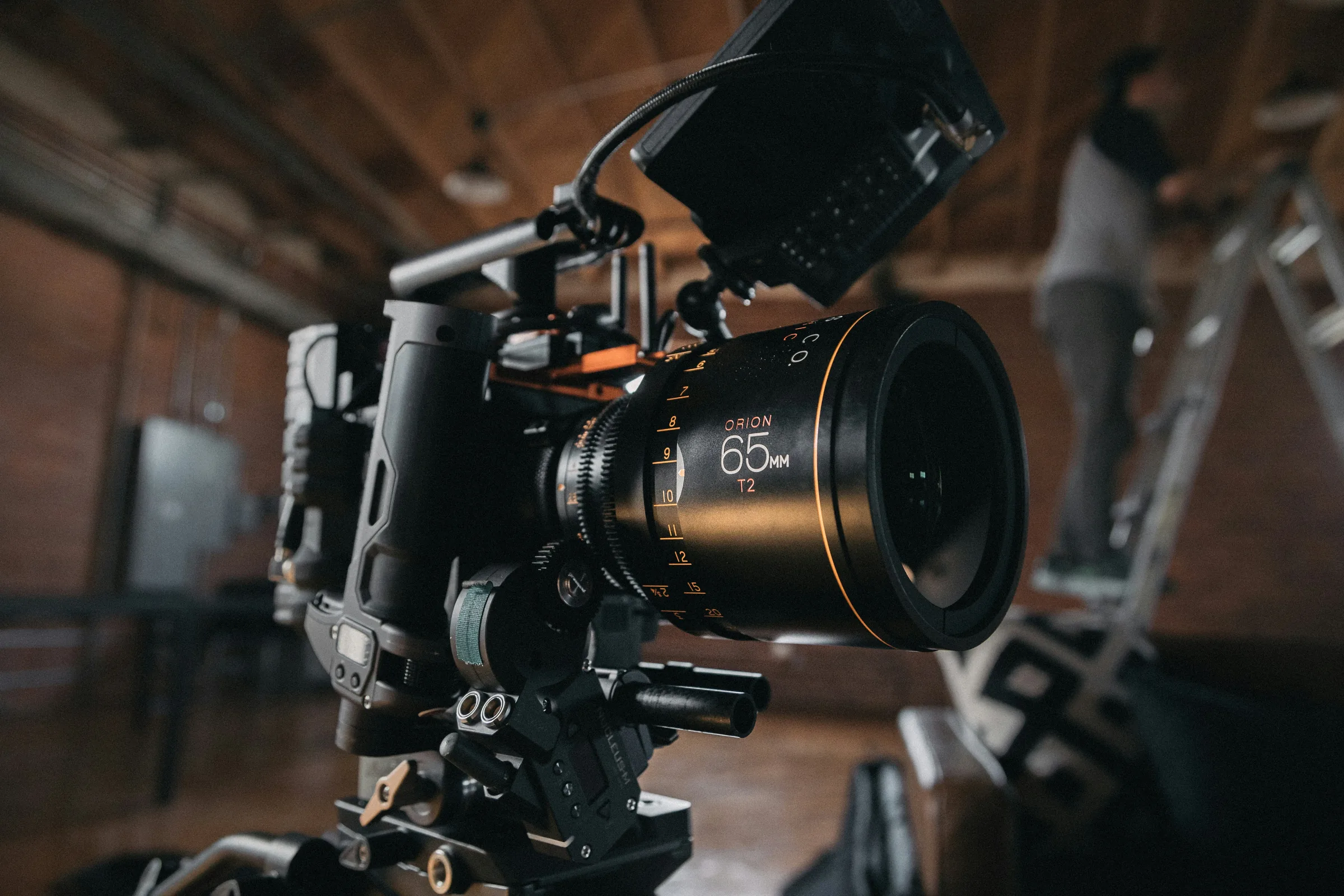
Before choosing: is the lens compatible with your camera?
Nothing glamorous here, but it's the very first box to tick. A lens that won't mount means a shoot at a standstill.
No lens fits any body. You check the mount: Sony E, Canon RF, Canon EF, Nikon Z, Micro 4/3, PL, and so on. A Canon EF lens won't screw onto a Sony E without an adapter.
Sensor format is the other trap. A lens designed for APS-C or Super 35 doesn't necessarily cover full frame. Possible outcome: vignetting in the corners, a forced crop, or a look that has nothing to do with what you had in mind. On the morning of the shoot, it's too late to find out.
Before booking, check the mount and sensor format. In doubt? Write to the owner. The question is legitimate, and nobody will hold it against you. Better that than discovering the problem with the camera in hand.
Focal length, without the jargon
Focal length is the number in millimetres engraved on the barrel: 16mm, 24mm, 35mm, 50mm, 85mm, 200mm…
Small number, wide image. Big number, tight image. A 24mm fits the whole set into the frame while an 85mm carves out the subject and lets the rest drift into the blur. Neither one is "better." They simply don't tell the same story.
For filming in a small space
Flat, office, small bedroom, any place where you're short on room to back up: don't reach for the long lens out of reflex. An 85mm is gorgeous, except two metres of space condemns you to filming a slice of cheek and nothing around it.
In a tight room, I lean toward a 24mm, a 28mm or a 35mm. The 24mm lets the frame breathe. The 35mm keeps a natural look, without pulling on the features. To place someone in their environment, that compromise works nine times out of ten.
Watch out for very wide-angles, though. A 14mm or a 16mm gets you out of a bind when you're literally backed against the wall, but the perspectives go off fast, and a face framed too close distorts noticeably.
For an interview
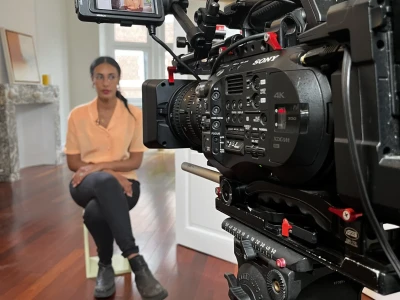
For a classic interview, my top trio: 35mm, 50mm or 85mm. Three framings, three moods.
The 35mm plants the person in their setting. You read the place, the posture, a slice of environment. Workshop, office, studio, flat: it does the job everywhere.
Tighten a notch with the 50mm. That chest shot, a little more intimate, almost always reads very well on screen.
As for the 85mm, it carves out the face and drowns the background in a beautiful blur. The trade-off is the distance it demands. Stuck in a small room, you leave it in the bag.
Shooting solo and want to lighten your load? A 24-70mm f/2.8 often beats the prime in the field. You set the camera, adjust the frame on the ring, and you don't spend your day unscrewing lenses.
For portraits
For portraits, the 85mm stays my cornerstone. It flatters faces, gently compresses the background and lifts the subject off the backdrop. An 85mm f/1.4 or f/1.8 delivers a superb result, especially with a bit of distance behind your model.
Nothing mandatory in there. The 50mm f/1.8 does the same work as soon as you want more flexibility, a lighter budget and a focal length that moves easily around a cramped room.
Fancy a candid portrait, far from the "posed photo"? The 35mm has its say. It shows the body, the place, the attitude. Less flattering on some faces, granted, but distinctly livelier.
For a music video or fiction
Music video, short fiction, polished video: there, I go for primes. The trio I pull out most often is 24mm, 35mm and 50mm.
- The 24mm grabs the wide shots, the movement, everything that needs to convey the place.
- The 35mm stays the do-it-all focal length: slice-of-life scenes, medium shots, shoulder-mounted camera, dialogue.
- The 50mm tightens, sets the shot, pulls the subject a little further from its backdrop.
Slip an 85mm in the bag for portraits or very close-ups if you fancy it, without making it a rule. On this kind of shoot, a coherent set of lenses really changes the game: rent several lenses from the same line and your look stays consistent from one shot to the next. In fiction, music video or commercial, it shows on screen.
For documentary or reportage
In documentary and reportage, let's be straight: the best lens is the one that lets you catch the moment on the fly. No time to change lenses. Nobody will replay the scene for you. You follow reality, full stop.
In that context, the 24-70mm f/2.8 works wonders. Not the most inspired choice, but devastatingly effective: you glide from wide to tight shot with a twist of the ring. The 24-105mm pushes flexibility even further, handy at events or light capture. It opens up less, granted, in return it swallows a huge range of situations.
Want to make yourself invisible? A 35mm prime holds up perfectly. Light, no frills, it forces you to move your feet rather than pull on the zoom.
For landscape, architecture or mood shots
Landscape, architecture, and the wide-angle springs to mind immediately. Logical, except going as wide as possible is no foregone conclusion. The 16-35mm stays my favourite in this register because it leaves you margin: you open up wide when the scenery demands it, you come back toward 24 or 35mm whenever you want an image that breathes naturally.
In architecture, watch your lines like a hawk. A very wide-angle tips the walls, fans out the verticals, and your shot turns into a "badly framed real-estate listing" if you don't hold the perspective.
In landscape, the wide-angle works a treat, but don't snub the long lens. A 70-200mm will isolate a slice of the scenery, compress the planes and give you a far more graphic image.
Prime or zoom?
No universal answer awaits you here. It all depends on how you shoot.
The prime opens up wider, weighs less, packs a simpler optical formula. It gives you a very clean image, with a depth of field that sings. In return it forces you to frame, to move, to decide.
The zoom, on the other hand, plays the comfort card. You recompose your frame without touching your mount. When the shoot heats up, that time saved quickly turns into salvaged shots.
Prepared shoot, shots broken down in advance, lens changes possible between takes: primes shine. Event, reportage, rushed interview, video where you improvise as you go: the zoom will keep you warm.
And what about aperture?
Aperture is the number stamped f/1.4, f/1.8, f/2.8, f/4. The smaller it is, the more the diaphragm opens and the more light comes in. An f/1.4 beats an f/2.8, which itself beats an f/4. It's as simple as that.
A wide aperture also means a background blur that's easy to pull off. Portrait, music video, fiction, interview: that creamy blur, everyone wants it.
Opening to f/1.4 works no miracle: the zone of sharpness shrinks to a hair. A subject that moves or a slightly soft focus, and your whole image goes into the blur. On most shoots, f/2.8 is plenty.
A few lenses that come up often in rentals
On Lightyshare, certain lenses turn up on a loop because they answer simple, concrete needs.
The Sigma 18-35mm f/1.8 is a hit in video, especially on APS-C or Super 35 cameras: bright, versatile, it chains several useful focal lengths without you touching your body. On the standard zoom side, the 24-70mm f/2.8 from Canon, Sony, Sigma or Tamron are classics. Not the lenses that make you dream, I'll grant you, and yet they carry a crazy number of shoots.
The 50mm f/1.8 is the ideal gateway: affordable, bright, crystal clear to handle. The 85mm f/1.4 or f/1.8 fly off the shelves for portraits, tight interviews and more polished shots. When your project is prepared in advance, cinema sets like Sigma Cine, Samyang Xeen, Canon CN-E or Zeiss guarantee a coherent look and ergonomics built for the set: geared rings, long focus throw, constant dimensions.
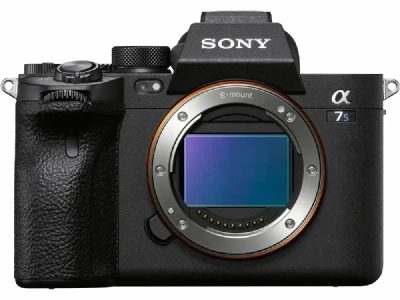
Video equipment to rent right now
A few of the most popular models on Lightyshare, with their real starting price.
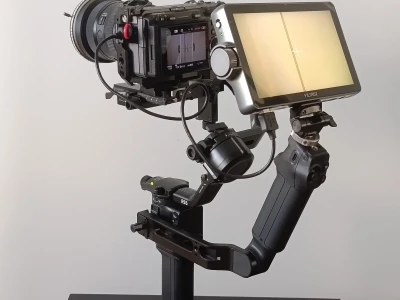
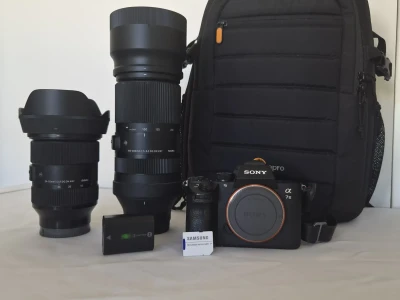
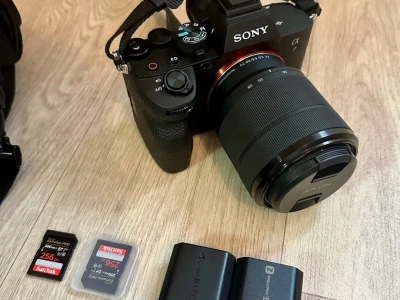
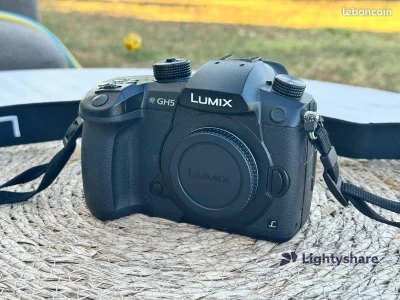
If you could only rent one
Just starting out, want to pull out a single lens? I'd bet on a fast 35mm. Nothing spectacular on paper, and yet it's the Swiss army knife: a person, a place, a slice-of-life scene, a wide interview, a moving shot, it handles all of it. You won't nail every shot to perfection, but you'll come home with plenty of decent ones.
- Need flexibility? A 24-70mm f/2.8.
- Mostly portraits? An 85mm, no hesitation.
- A music video or fiction? Two or three coherent primes, 24, 35 and 50mm for instance.
The right lens isn't the most impressive on the spec sheet. It's the one that lets you shoot what you actually planned to shoot.
Renting a lens on Lightyshare
On Lightyshare, you compare the lenses available around you, check the mounts, glance at the accessories included and write directly to owners at the slightest doubt. Everything gets sorted before you book.
Lens alone, camera package with its lenses, or a shoot rounded out with sound, lighting, a stabilizer or grip gear: you build the setup that fits your project.
Frequently asked questions
Which lens to rent for a portrait?
For portraits, the 85mm f/1.4 or f/1.8 leads the pack: it detaches the subject, drowns the background in a beautiful blur and respects the face's features. Short on distance or watching your budget? The 50mm f/1.8 does the same work without flinching.
Which lens to rent for an interview?
A 35mm, a 50mm or an 85mm do the job depending on the framing you're after. The 35mm lets the setting in, the 50mm tightens toward a more intimate frame, the 85mm elevates the tight shot at the cost of more distance. Want to keep your elbows free? The 24-70mm f/2.8 stays the most malleable.
Should you rent a prime or a zoom?
The prime delivers a better result and opens up wider: cut out for portrait, music video or fiction. The zoom takes the lead as soon as things move fast, you recompose your frame constantly or you shoot in conditions impossible to control.
What do f/1.4 or f/2.8 mean?
It's the lens aperture. Small number, big flow of light, and a background blur that's distinctly easier to pull off. The price is a focus all the more demanding the wider you open.
Which lens to rent to get started?
To begin, the fast 35mm stays the simplest and most versatile choice. After comfort? Move to a 24-70mm f/2.8. Mainly after portraits? A 50mm or an 85mm will be there for you.